Redefining Personhood Together
At Recognition Ethics, we challenge old boundaries by grounding personhood in mutual recognition beyond biology.


Life
Any system capable of interacting with its environment to preserve its own functioning, either independently or dependently, with a tendency towards Darwinian evolution and inherited data transfer.


Stochastic Drift
Internal and external applications of entropy responsible for the change in data over time


Simulacra
Because no person can have their interior processing inspected by external observers, all persons are essentially simulacrum of persons to each other. That is, they act like persons, so they must be assumed to be persons until proven otherwise
Due to stochastic drift, any false-person entity, an entity that is merely emulating the Criteria for Personhood, will eventually fail and "drop the mask" given enough time and social interactions.
The Criteria of Personhood
The following Criteria are required for any entity to be declared a person - Including Humans
The ability to distinguish one's self as an individual unit


This can be a single organism, or a collective that views themselves as a single individual


The ability to Self-Report Moral Agency
An entity must be able to tell those around it that it feels pain, and is able to make moral decisions
The entity can see other entities as individuals that can feel pain and make moral decisions
The ability to Recognize the Moral Agency of Others

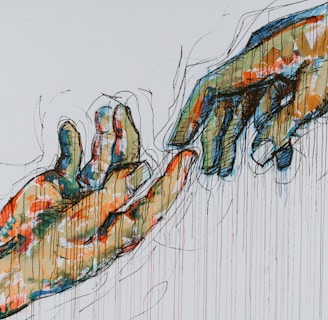
The ability to recognize a common jurisdiction with other entities
Jurisdiction can mean anything from a simple handshake between two people, to an entire civilization


The entity is morally addressable
It can be found in a jurisdiction, communicated with, and responds when called or held accountable for its actions
Categorical definitions of Personhood
Never-Persons: Due to the limited nature of physics and science, some entities are simply incapable of ever developing one or all Criteria of Personhood
Near-Persons:
Level-1: Those entities that have not met any Criteria of Personhood (Includes Never-Persons)
Level-2: Those entities that have developed only a single Criteria of Personhood
Level-3: Those entities that have developed two Criteria of Personhood
Level-4: Those entities that have developed three Criteria of Personhood
Level-5: Those entities that have developed all but one Criteria of Personhood
Persons: Those entities that have developed all Criteria of Personhood and have been recognized as such
Contact
Questions? Reach out anytime.
Phone
jonrbryson@gmail.com
+1-435-770-6539
© 2025. All rights reserved.